Common Roofing Scams and How to Avoid Them
Your roof is one of the most important — and expensive — parts of your home. That makes it a prime target for dishonest contractors looking to make a quick buck. Whether you’ve just survived a storm or simply noticed a few missing shingles, knowing how to spot a roofing scam could save you thousands of dollars and a whole lot of headaches.
The Storm Chaser
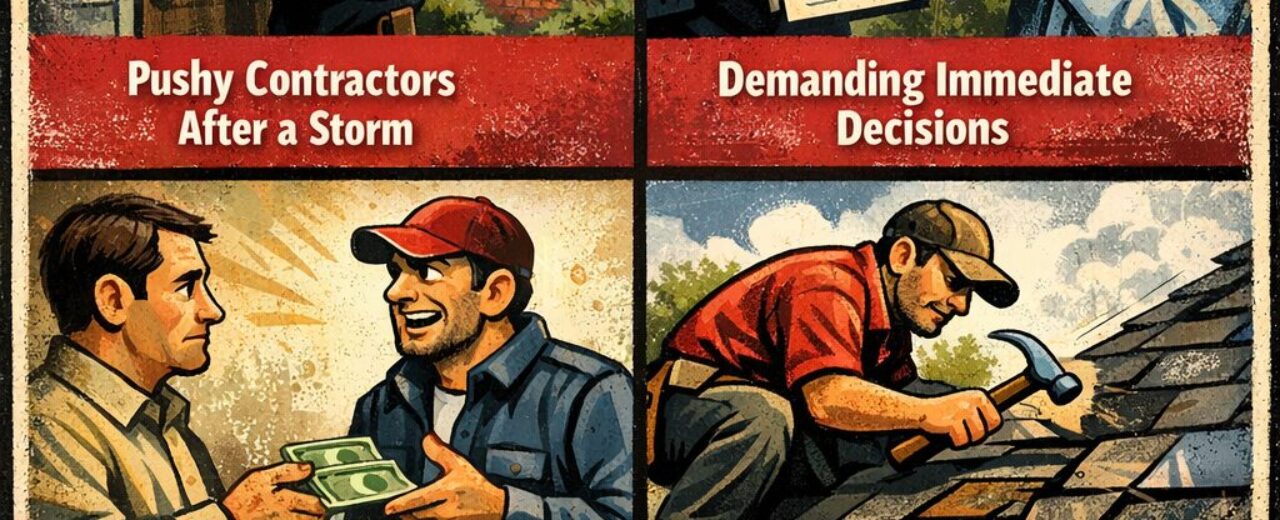
After heavy rain, hail, or high winds, you may notice strangers knocking on your door claiming they “spotted damage” on your roof while driving through the neighborhood. These so-called storm chasers are opportunists. They prey on homeowners who are stressed, vulnerable, and eager to get repairs done fast. They’ll often pressure you to sign a contract on the spot, collect a deposit, and then disappear — or deliver shoddy work that fails within months.
How to avoid it: Never hire a contractor who shows up uninvited after a storm. Take time to research local, reputable roofing companies with a verifiable physical address and a track record in your community.
The Lowball Estimate
If a quote sounds too good to be true, it almost certainly is. Some contractors win the bid with an unusually low estimate, only to claim mid-project that they’ve discovered “unexpected damage” — and suddenly the bill doubles or triples. Others cut corners by using cheap materials or skipping underlayment, leaving you with a roof that won’t last.
How to avoid it: Get at least three written estimates before hiring anyone. If one bid is dramatically lower than the others, ask why. A legitimate contractor will be happy to walk you through the breakdown of costs.
The Insurance Scam
A growing scam involves contractors who offer to “handle your insurance claim” or promise to waive your deductible to win your business. Waiving deductibles is actually illegal in many states and constitutes insurance fraud. These contractors often inflate damage claims, which can lead to your policy being cancelled or your premiums skyrocketing.
How to avoid it: Always file your own insurance claim directly with your provider. Be wary of any contractor who offers to cover your deductible — even if it sounds like a great deal.
The Upfront Payment Trap
Legitimate roofing projects typically require a deposit but if a contractor demands full payment upfront, walk away. This is one of the clearest warning signs of a fly-by-night operation.
How to avoid it: Never pay in full before work begins. Use a credit card when possible for added consumer protection, and always get a written contract before any money changes hands.
Protecting Yourself
The best defense against roofing scams is doing your homework. Verify licenses and insurance, check reviews on Google and the Better Business Bureau, and ask for references from past clients. A trustworthy contractor will welcome your questions — a dishonest one won’t.
Your roof protects everything beneath it. Make sure the person you hire to fix it deserves that same trust.