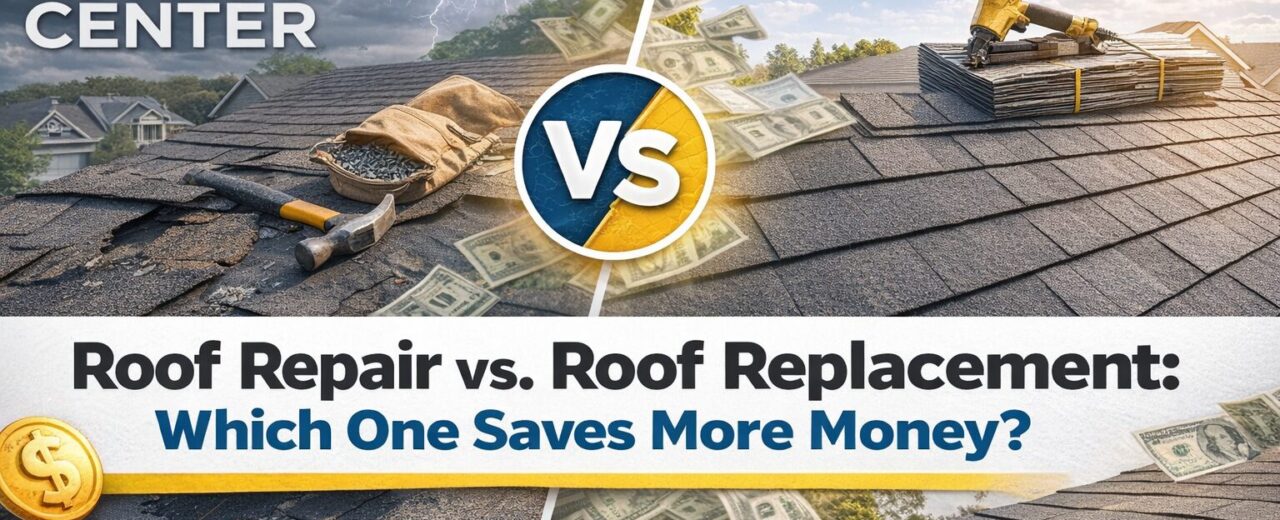
Roof Repair vs. Roof Replacement: Which One Saves More Money?
When homeowners notice a leak, missing shingles, or storm damage, the big question usually follows: Should I repair the roof or replace it?
At first glance, repairs seem like the cheaper option. And sometimes they are. But in many cases, a replacement can actually save you more money long-term. The right decision depends on your roof’s age, extent of damage, and your future plans for the home.
Let’s break it down.
When Roof Repair Saves You Money
Roof repairs are typically the most cost-effective choice when:
- The damage is isolated to a small area
- The roof is less than 10–15 years old
- The underlying decking and structure are still solid
- The issue was caused by a recent storm or single event
For example, replacing a handful of shingles, resealing flashing around a vent, or fixing a small leak can extend your roof’s life without the expense of full replacement.
A well-executed repair can add several years to your roof and delay a larger investment. If you’re planning to move in the next few years, a repair may also make financial sense.
However, repairs only save money when they truly solve the problem — not when they temporarily patch a failing system.
When Roof Replacement Saves You More
There comes a point where repairs become a money pit.
If your roof is 18–25 years old (depending on the material), repairs may only buy time — and often not much of it. Constant patchwork adds up quickly. Multiple service calls, interior damage from recurring leaks, and higher energy bills from poor ventilation can end up costing far more than a replacement would have.
Here’s when replacement often makes better financial sense:
- Widespread shingle deterioration
- Granule loss and exposed matting
- Soft decking or sagging areas
- Multiple leaks
- Hail damage across large sections
- Roof nearing the end of its expected lifespan
A new roof resets the clock. It improves energy efficiency, increases home value, enhances curb appeal, and often comes with strong manufacturer warranties.
For homeowners planning to stay in their homes 10+ years, replacement is often the smarter financial move. Instead of repeatedly paying for short-term fixes, you invest once and eliminate ongoing repair costs.
The Hidden Costs to Consider
Many homeowners focus only on upfront price. But real savings come from looking at total cost over time.
Ask yourself:
- How many times have I repaired this roof already?
- Is water damage affecting insulation or drywall?
- Will another repair last through the next storm season?
- Am I planning to stay in this home long-term?
Sometimes the “cheaper” option today becomes the more expensive decision over five years.
The Bottom Line
If your roof is relatively new and damage is minor, a targeted repair can absolutely save you money.
But if your roof is aging, showing widespread wear, or requiring repeated fixes, replacement is often the better long-term investment.
The key is an honest inspection from a roofing professional who will show you the full picture — not just sell you the bigger job.
In roofing, the goal isn’t to spend less today. It’s to spend wisely.
And sometimes, the biggest savings come from knowing when it’s time to stop patching and start fresh.