Roof Ventilation Myths That Cost Homeowners Money
Roof ventilation isn’t something most homeowners think about until there’s a problem. Unfortunately, several common misconceptions can lead to higher energy bills, moisture problems, premature roof deterioration, and unnecessary repairs.
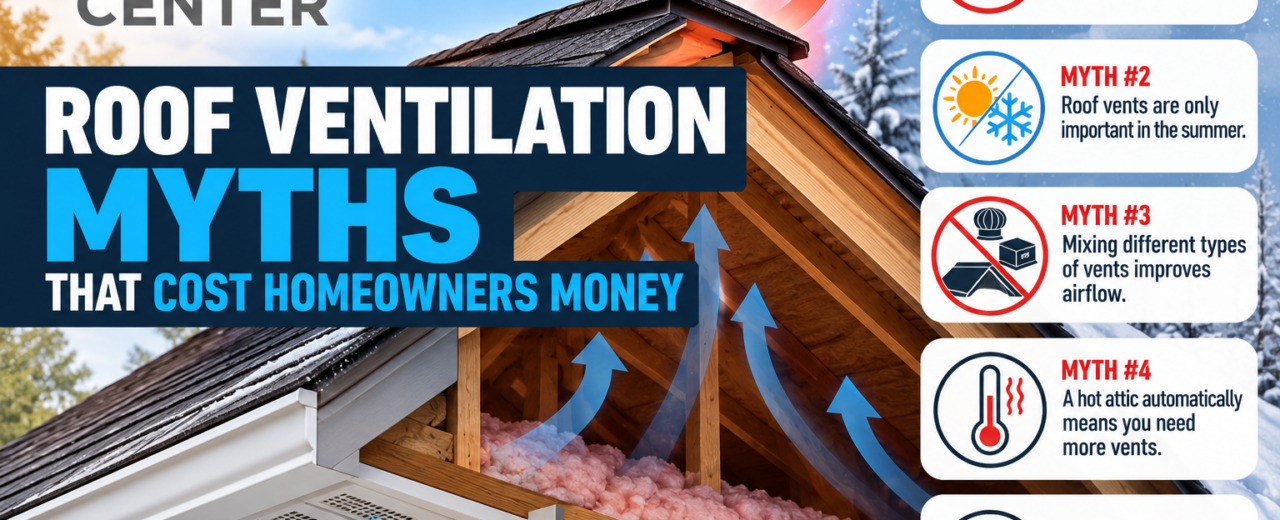
Myth #1: More ventilation is always better.
A properly ventilated attic requires balance. Intake ventilation, typically located at the soffits, works with exhaust ventilation near the roof’s peak. Adding exhaust vents without adequate intake doesn’t necessarily improve airflow—and can actually create problems.
Myth #2: Roof vents are only important in the summer.
Ventilation helps release trapped heat during warmer months, but it’s just as important during winter. Warm, moisture-filled air from inside the home can enter the attic and condense on cold surfaces. Over time, that moisture can contribute to mold, damaged insulation, and deterioration of the roof decking.
Myth #3: Mixing different types of exhaust vents improves airflow.
Homeowners sometimes assume combining ridge vents, box vents, turbines, and powered fans will create better ventilation. In reality, competing exhaust systems can disrupt the intended airflow and potentially pull air through one exhaust vent into another instead of through the soffits.
Myth #4: A hot attic automatically means you need more vents.
Ventilation may be part of the problem, but insulation levels, blocked soffits, air leakage, ductwork, and attic design should also be evaluated before adding vents.
Myth #5: Ventilation has nothing to do with roof life.
Poor attic conditions can expose the underside of your roofing system to excessive heat and moisture. Addressing ventilation issues early can help protect the roof system and reduce avoidable expenses.
At The Roofing Center, we look at the entire roofing system—not just the shingles. Before spending money adding vents, replacing insulation, or repairing recurring problems, have the attic and roof evaluated to determine what’s actually causing the issue.