Here’s an SEO-friendly blog written for homeowners in both Colorado and Utah. It is approximately 750 words, targets common roofing search intent, and positions The Roofing Center as the trusted local expert.
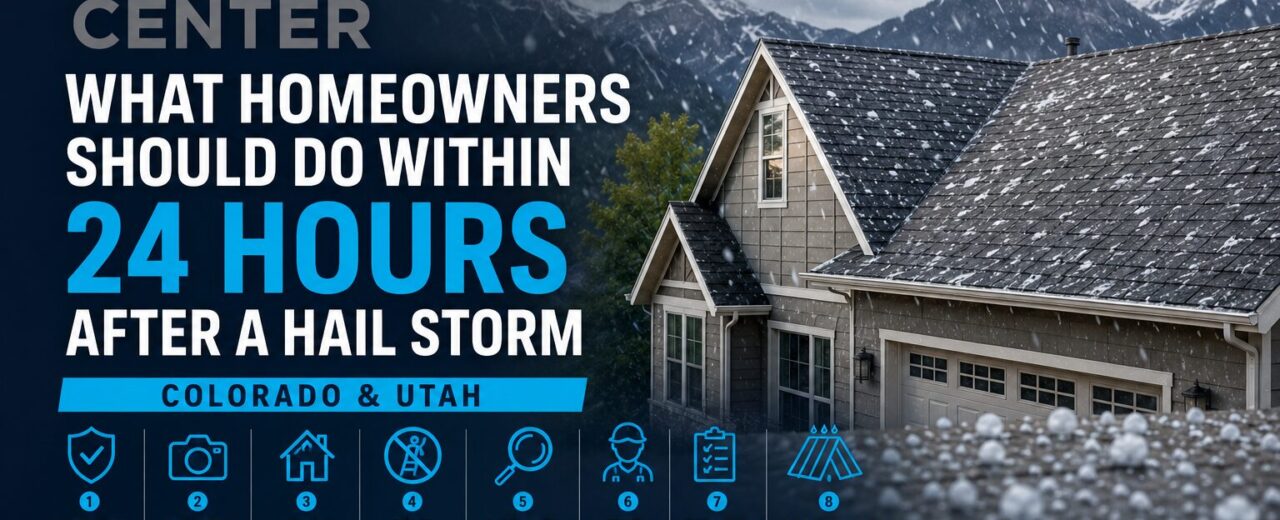
What Homeowners Should Do Within 24 Hours After a Hail Storm in Colorado & Utah
Hailstorms are a fact of life across Colorado and Utah. Whether it’s golf ball-sized hail along the Front Range or powerful summer storms moving through the Wasatch Front, even a brief storm can cause thousands of dollars in hidden roof damage.
The first 24 hours after a hailstorm are critical. Taking the right steps can help protect your home, prevent additional damage, and make the insurance process much smoother if repairs are needed.
Here are the most important things every homeowner should do after a hailstorm.
1. Make Sure Everyone Is Safe
Your first priority should always be safety.
Wait until the storm has completely passed before going outside. Be aware of downed power lines, broken tree limbs, shattered glass, and slippery surfaces. If your home has suffered structural damage or active leaks, avoid unsafe areas until they can be inspected.
2. Document the Storm Damage
Before making any temporary repairs, take photos and videos of everything you can safely see.
Document:
- Roof damage visible from the ground
- Damaged gutters and downspouts
- Dented garage doors
- Broken windows or screens
- Siding damage
- Fence damage
- Outdoor furniture
- Vehicles
- Fallen tree limbs
If hailstones are still on the ground, photograph them next to a tape measure or common object to show their size. This documentation may be valuable if you decide to file an insurance claim later.
3. Check Inside Your Home
Not all storm damage is visible from outside.
Walk through your home and look for:
- Water stains on ceilings
- New leaks
- Wet insulation
- Damp drywall
- Water around skylights
- Moisture in the attic
The sooner water intrusion is discovered, the less likely it is to lead to mold or expensive structural repairs.
4. Don’t Climb on Your Roof
One of the biggest mistakes homeowners make is trying to inspect their own roof.
Hail damage isn’t always obvious, and walking on a recently damaged roof can make existing problems worse—or cause a serious fall.
Instead, inspect your roof from the ground using binoculars if necessary and leave the close inspection to a trained roofing professional.
5. Schedule a Professional Roof Inspection
Many hail impacts cannot be seen from the ground.
A professional inspection can identify:
- Bruised asphalt shingles
- Granule loss
- Cracked shingles
- Damaged flashing
- Dented vents
- Soft metal impacts
- Hidden damage that could shorten your roof’s lifespan
Just because your roof isn’t leaking today doesn’t mean it escaped damage. Small impacts often become major leaks months later after additional sun, snow, and wind exposure.
6. Avoid High-Pressure Storm Chasers
Major hailstorms often attract out-of-state roofing companies that move into neighborhoods immediately after severe weather.
Before signing anything:
- Verify the company has an established local office.
- Check online reviews.
- Confirm they carry proper insurance.
- Ask for local references.
- Never feel pressured into signing a contract on the spot.
Choosing a reputable local roofing contractor helps ensure quality workmanship, warranty support, and accountability long after the storm has passed.
7. Review Your Insurance Coverage
Before filing a claim, understand what your homeowner’s insurance covers.
Many policies have deductibles, depreciation provisions, or Actual Cash Value (ACV) roof coverage that can affect your out-of-pocket costs. Having your roof professionally inspected first helps determine whether filing a claim makes financial sense.
8. Make Temporary Repairs if Necessary
If your roof has active leaks or broken windows, take reasonable steps to prevent additional damage.
Temporary measures may include:
- Covering damaged areas with a tarp
- Catching water in buckets
- Moving valuables away from leaks
- Covering broken windows
Save receipts for any emergency materials or temporary repairs, as they may be reimbursable depending on your insurance policy.
Protect Your Home Before Small Problems Become Expensive Repairs
Colorado and Utah experience some of the most severe hailstorms in the country. Even storms that seem minor can reduce the life of your roofing system without any obvious signs from the ground.
At The Roofing Center, we provide comprehensive post-storm roof inspections to help homeowners understand the true condition of their roof. If damage is found, we’ll explain your options, document our findings, and help you make an informed decision—without pressure.
The sooner your roof is inspected after a hailstorm, the better your chances of preventing leaks, avoiding additional damage, and protecting one of your home’s most valuable investments.
If your neighborhood recently experienced hail, don’t wait for a leak to discover there’s a problem. Schedule a professional roof inspection and gain peace of mind knowing your home is protected.