Why Proper Fastener Installation Matters on Every Roofing System
When homeowners think about what makes a roof last, they typically focus on the roofing material itself. Shingles, metal panels, underlayment, flashing, and ventilation all play important roles—but one of the smallest components of a roofing system can have an enormous impact on its performance: the fasteners.
Whether you’re installing asphalt shingles, metal roofing, synthetic roofing, or another roofing system, proper fastener selection and installation are critical to the long-term performance of the roof.
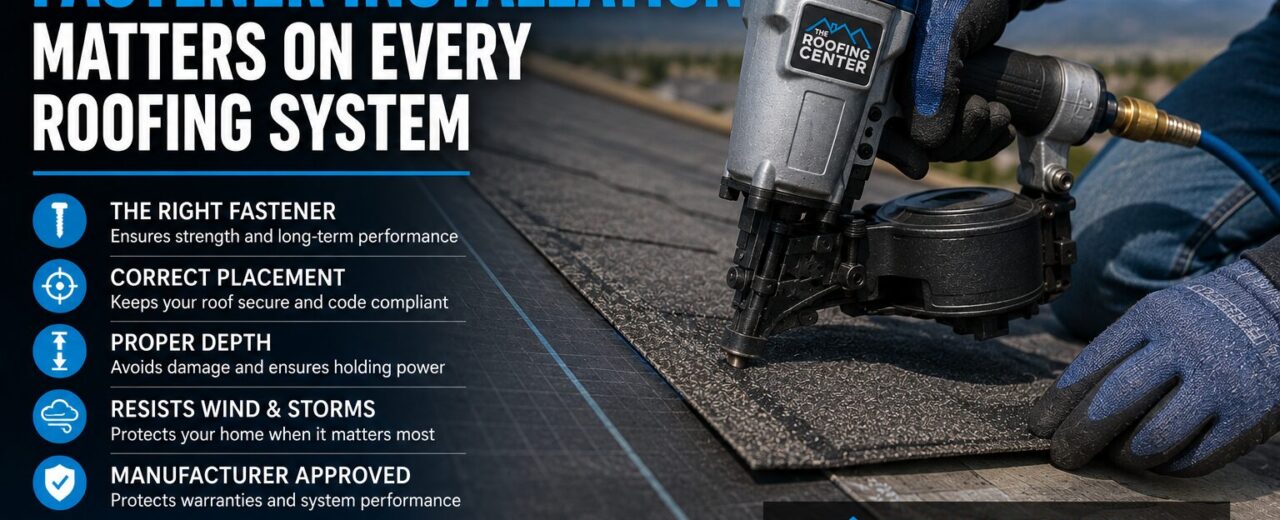
The Right Fastener Matters
Not every roofing fastener is created equal. Manufacturers specify particular fastener types, lengths, materials, and installation patterns for a reason.
Depending on the roofing system, requirements may include ring-shank nails, roofing nails, screws, specific corrosion-resistant materials, or fasteners of a particular length.
Using an incorrect fastener can reduce the roofing system’s ability to resist wind, movement, moisture, and other environmental conditions.
This becomes especially important in areas like Colorado and Utah, where roofs regularly experience high winds, temperature swings, snow, hail, and intense UV exposure.
Fastener Placement Is Just as Important
Using the correct fastener isn’t enough. It also needs to be installed in the correct location.
Asphalt shingle manufacturers, for example, designate specific nailing zones. Installing nails too high, too low, or outside the approved area can affect how securely the shingles remain attached to the roof.
Other roofing systems have equally specific fastening patterns.
Proper placement distributes loads across the roofing system and helps individual components perform together rather than independently.
Overdriven and Underdriven Fasteners Create Problems
Fastener depth is another commonly overlooked installation detail.
An overdriven fastener can cut into or damage roofing material, reducing its holding strength. An underdriven fastener may prevent roofing materials from sitting properly and can potentially interfere with overlapping shingles or panels.
Fasteners should generally be installed flush according to the roofing manufacturer’s installation requirements.
It’s a small detail that can make a significant difference over thousands of fasteners across an entire roof.
Improper Fastening Can Lead to Wind Damage
When strong winds hit a roof, they create uplift forces that attempt to pull roofing materials away from the structure.
Correct fastening helps the roofing system resist those forces.
If fasteners are improperly spaced, incorrectly placed, or insufficient in number, sections of the roofing system may become more vulnerable during high-wind events.
What appears to be “storm damage” can sometimes reveal an underlying installation problem that existed long before the storm occurred.
Manufacturer Requirements Matter
Roofing manufacturers spend significant time engineering and testing their products. Their installation specifications aren’t simply suggestions—they’re part of the system’s design.
Failure to follow those requirements can potentially affect product performance and may impact warranty coverage.
That’s why quality roofing contractors don’t simply focus on making a finished roof look good. They focus on installing the components underneath correctly as well.
Small Details Determine Long-Term Performance
Most homeowners will never see the thousands of fasteners installed underneath their finished roofing system.
But those small components help determine how well the roof performs for years to come.
At The Roofing Center, we believe proper roofing installation comes down to doing the details correctly—from decking and underlayment to flashing, ventilation, and fasteners.
A quality roof isn’t just about what you can see. It’s about everything underneath being installed correctly.