Why Roof Ventilation Matters More Than You Think
When most homeowners think about protecting their home, they picture sturdy walls, quality insulation, or a fresh coat of exterior paint. Roof ventilation rarely makes the list. Yet this often-overlooked system quietly works around the clock to protect your home’s structure, reduce your energy bills, and even safeguard your family’s health. It’s time to give it the attention it deserves.
What Is Roof Ventilation, Exactly?
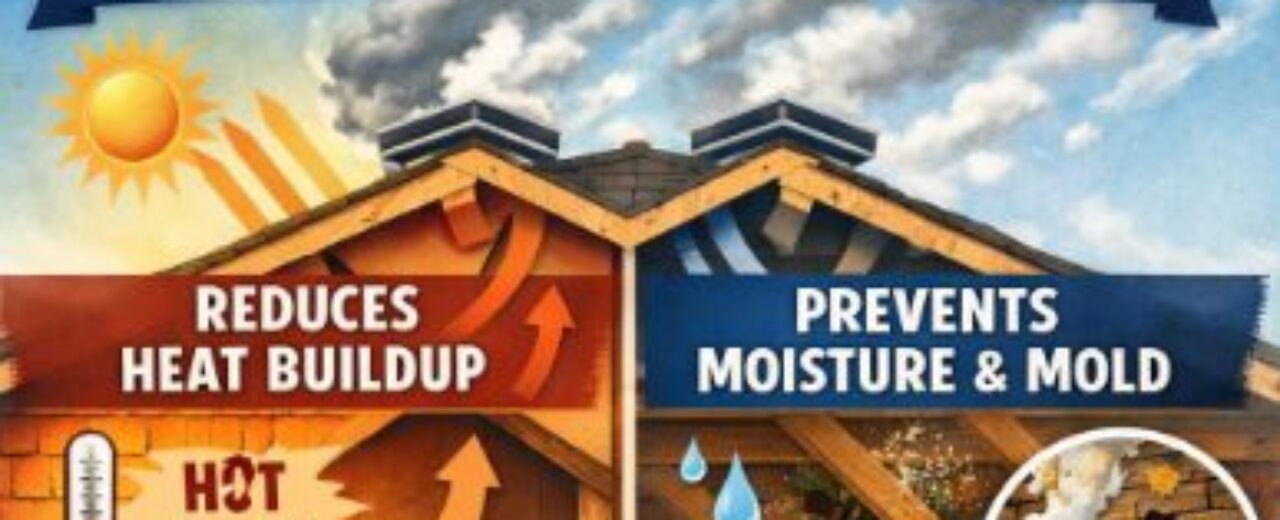
Roof ventilation is a system of intake and exhaust vents that allows air to flow continuously through your attic space. Cool, fresh air enters through intake vents typically located along the soffit while warm, stale air exits through exhaust vents near the ridge of the roof. The result is a balanced exchange that regulates temperature and moisture in the space between your living area and your roof deck.
Simple in concept, but the consequences of getting it wrong are anything but simple.
The Summer Heat Problem
During summer, an unventilated attic can reach temperatures of 150°F or higher. That trapped heat radiates downward into your living spaces, forcing your air conditioning system to work overtime. The result? Skyrocketing energy bills and a home that never quite feels cool enough, no matter how low you set the thermostat.
Proper ventilation expels that superheated air before it becomes a problem, reducing the strain on your HVAC system and potentially cutting cooling costs by up to 10-15%. Over time, those savings add up to real money.
The Winter Moisture Trap
While summer heat gets the most attention, winter is where poor roof ventilation can cause the most lasting damage. When warm, humid air from your living spaces rises into a cold, poorly ventilated attic, it condenses on rafters, insulation, and the roof deck. This moisture creates the perfect breeding ground for mold and mildew, causes wood to rot, and degrades insulation performance significantly.
Worse still is the ice dam a notorious winter villain. When heat escapes into the attic and warms the roof deck, snow melts and refreezes at the cold eaves, forming a dam that forces water under your shingles. The damage from a single bad ice dam season can run into thousands of dollars in repairs.
Your Roof’s Lifespan Is on the Line
Roofing materials are designed to perform within a certain temperature range. Excessive heat trapped beneath the shingles accelerates their deterioration, causing them to crack, curl, and fail years ahead of schedule. A well-ventilated roof simply lasts longer — and given that a full roof replacement is one of the most expensive home improvement projects you can face, protecting that investment makes financial sense.
Don’t Overlook the Obvious
Roof ventilation isn’t glamorous, and it won’t win compliments from dinner guests. But it works tirelessly behind the scenes to keep your home energy-efficient, structurally sound, and comfortable year-round. If you haven’t had your ventilation system inspected recently, it’s worth a conversation with a qualified roofing professional. The cost of a checkup is nothing compared to what inadequate ventilation can cost you down the road.
Sometimes, the most important systems are the ones you never see until something goes wrong.