7 Warning Signs Your Roof Is Failing (Most Homeowners Miss #4)
Your roof is one of the most important—and most overlooked—parts of your home. It quietly protects everything underneath it, until one day it doesn’t. By the time most homeowners realize there’s a problem, the damage is already expensive.
The good news? Your roof usually gives clear warning signs before it fails. The bad news? Many of those signs are easy to miss.
Here are 7 warning signs your roof may be failing, including one that homeowners almost always overlook.
1. Shingles Are Curling, Cracking, or Missing
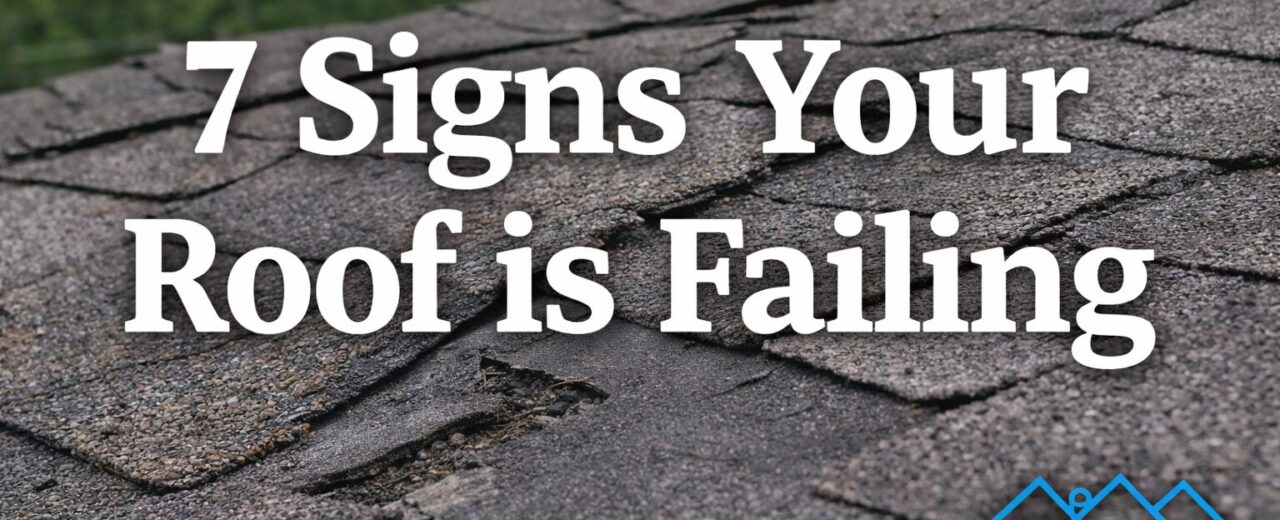
Take a look at your roof from the ground. Shingles that are curling at the edges, cracking, or completely missing are a red flag. These issues mean your shingles are no longer sealing out water effectively—often due to age, heat damage, or wind.
If left unchecked, water can start working its way into the roof deck.
2. Granules Are Showing Up in Gutters or Driveways
Those sand-like granules on asphalt shingles aren’t just cosmetic—they protect your roof from UV damage. When you start seeing granules piling up in gutters or near downspouts, it’s a sign your shingles are breaking down.
Once granules are gone, shingles deteriorate fast.
3. Water Stains on Ceilings or Walls
This one’s more obvious, but it’s often ignored or misdiagnosed. Yellow or brown stains on ceilings and walls usually mean water intrusion. And here’s the kicker: the leak you see inside may be far away from where water is actually getting in on the roof.
Ignoring stains doesn’t make the problem go away—it just makes repairs more expensive.
4. Soft Spots or “Spongy” Areas on the Roof (Most Homeowners Miss This)
This is the warning sign most homeowners never notice. If parts of your roof feel soft or spongy when walked on, it usually means moisture has already compromised the roof decking underneath the shingles.
By the time this happens, you’re no longer dealing with a simple repair—you’re dealing with structural damage. Many roofs look “fine” from the ground while rotting from the inside out.
5. Flashing Is Rusted, Bent, or Pulling Away
Flashing is the metal installed around chimneys, vents, and valleys to keep water out. When flashing fails, leaks follow quickly. Rust, gaps, or loose sections are all signs your roof’s most vulnerable points are exposed.
6. Your Roof Is Near or Past Its Expected Lifespan
Most asphalt shingle roofs last 15-20 years, depending on materials, ventilation, and weather. If your roof is approaching that age, even minor issues should be taken seriously. Older roofs don’t bounce back from damage the way newer ones do.
7. Energy Bills Are Creeping Up
A failing roof can impact insulation and ventilation, forcing your HVAC system to work harder. If energy bills are rising without a clear reason, your roof may be part of the problem.
Don’t Wait for a Major Leak
Catching roof issues early can mean the difference between a small repair and a full replacement. If you’ve noticed one—or several—of these warning signs, it’s worth having your roof professionally inspected.
Your roof will always tell you when it’s in trouble. The key is knowing how to listen. 🏠🔍