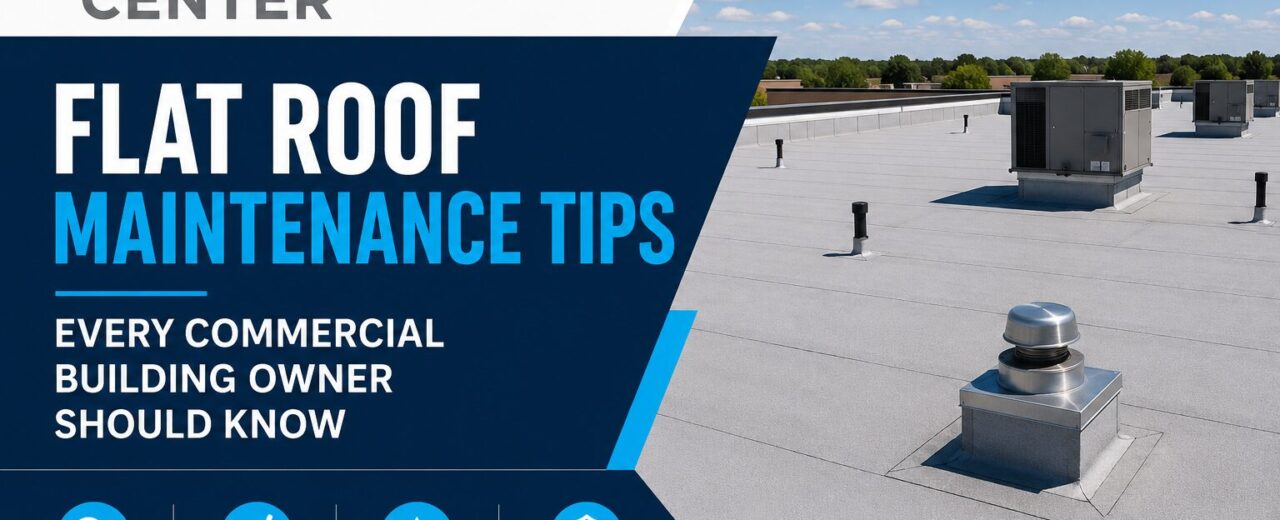
Flat roofing systems are one of the most common roofing choices for commercial buildings, HOA communities, industrial properties, and retail centers. While flat roofs are durable and cost-effective, they also require consistent maintenance to perform properly over the long term.
For property managers and commercial building owners, roofing should not be treated as a reactive expense. A commercial roof is a major capital asset that directly affects operating costs, tenant satisfaction, building protection, and long-term property value.
Unfortunately, many roofing failures begin as small maintenance issues that go unnoticed until leaks, interior damage, or emergency repairs occur.
At The Roofing Center, we help commercial property owners protect their investments through proactive roof maintenance, long-term planning, and preventative asset management strategies designed to reduce costly surprises.
Why Flat Roof Maintenance Matters
Unlike steep-slope residential roofs, flat roofing systems are designed with minimal slope for drainage. While highly effective when maintained properly, flat roofs are more vulnerable to standing water, membrane damage, and drainage-related issues over time.
Without regular inspections and maintenance, small roofing concerns can escalate into major structural problems that disrupt operations and increase repair costs.
Benefits of Proactive Flat Roof Maintenance
A preventative maintenance program can help:
- Extend roof lifespan
- Reduce emergency repair costs
- Prevent interior water damage
- Protect HVAC equipment and assets
- Maintain tenant satisfaction
- Improve budgeting accuracy
- Preserve manufacturer warranty coverage
Routine maintenance is almost always more affordable than large-scale roof restoration or premature roof replacement.
Understand Your Commercial Roofing System
One of the most important aspects of roof asset management is understanding the type of roofing system installed on your building.
Common Flat Roofing Systems
TPO Roofing (Thermoplastic Polyolefin)
A single-ply membrane roofing system known for energy efficiency and UV resistance.
EPDM Roofing (Ethylene Propylene Diene Monomer)
A durable synthetic rubber roofing membrane commonly used on commercial properties.
PVC Roofing
A highly durable membrane system known for chemical resistance and long-term performance.
Modified Bitumen Roofing
An asphalt-based roofing system designed for durability and weather resistance.
Each system has unique maintenance requirements, drainage considerations, and expected lifespans. A trusted roofing partner can help property managers develop customized maintenance plans based on the building’s specific roofing system.
Inspect Drainage Systems Regularly
Drainage is one of the most critical components of flat roof performance.
Because flat roofs do not shed water as quickly as sloped roofs, clogged drains or poor drainage can quickly lead to ponding water — one of the leading causes of flat roof deterioration.
Problems Caused by Ponding Water
- Premature membrane wear
- Increased leak risk
- Structural stress from added weight
- Mold and moisture intrusion
- Faster material deterioration
Maintenance Tips for Drainage Systems
- Clear roof drains regularly
- Remove debris buildup
- Inspect gutters and downspouts
- Monitor low areas where water collects
- Address drainage issues early
Routine inspections after storms are especially important in Colorado, where snowmelt and heavy rain can place additional stress on drainage systems.
Schedule Routine Roof Inspections
One of the most effective ways to protect a commercial roof is through scheduled professional inspections.
Many commercial roofing issues are difficult to identify without trained evaluation. By the time leaks become visible inside the building, damage may already be extensive.
What a Commercial Roof Inspection Should Include
Membrane Evaluation
Inspecting for punctures, seam separation, blistering, or UV deterioration.
Flashing Inspection
Checking roof edges, penetrations, and transitions for water intrusion risks.
Moisture Detection
Identifying trapped moisture beneath the roofing system before major leaks occur.
Drainage Assessment
Evaluating drainage performance and ponding concerns.
Structural Review
Assessing signs of sagging or long-term stress.
A proactive inspection schedule helps building owners identify issues early and prioritize repairs before they become costly emergencies.
Address Minor Repairs Immediately
One of the biggest mistakes commercial property owners make is delaying small roofing repairs.
Minor membrane punctures, flashing separation, or drainage problems may appear insignificant initially, but they often worsen quickly when exposed to weather conditions.
Why Early Repairs Matter
Small repairs help prevent:
- Interior water damage
- Insulation saturation
- Mold growth
- Structural deterioration
- Tenant disruptions
- Emergency repair expenses
Addressing issues early is a key part of long-term roof asset management and cost control.
Budget for Long-Term Roof Maintenance
Commercial roofing should be approached strategically rather than reactively.
Instead of waiting for major failures, property managers should develop long-term roofing budgets that include routine inspections, preventative maintenance, repair forecasting, and eventual replacement planning.
A Strong Roofing Budget Strategy Includes:
- Annual roof inspections
- Seasonal maintenance planning
- Repair reserve budgeting
- Roof lifespan forecasting
- Capital expenditure preparation
This approach creates more predictable operating expenses while reducing the risk of sudden large-scale roofing costs.
Colorado Weather Creates Additional Roofing Challenges
Commercial roofs in Colorado face significant weather-related stress throughout the year.
Common Weather Challenges Include:
- Heavy snow accumulation
- Freeze-thaw cycles
- High winds
- UV exposure at elevation
- Severe hailstorms
- Rapid temperature fluctuations
These conditions can accelerate roofing wear and increase the importance of preventative maintenance planning.
Property owners who proactively maintain their roofs are often better prepared to handle storm-related issues before they lead to operational disruptions.
Choose a Roofing Partner — Not Just a Contractor
A commercial roofing company should provide more than occasional repairs. The right roofing partner helps property managers make informed long-term decisions that protect both the building and the budget.
A Reliable Commercial Roofing Partner Should Provide:
- Ongoing maintenance planning
- Detailed roof assessments
- Transparent repair recommendations
- Budget forecasting support
- Emergency response services
- Long-term asset management guidance
At The Roofing Center, we work closely with commercial property owners, HOA managers, and facility teams to create roofing strategies focused on long-term performance and cost savings.
Protect Your Roofing Investment With a Proactive Maintenance Plan
Your commercial roof is one of the most important assets protecting your property. Consistent maintenance, routine inspections, and proactive planning can significantly extend roof lifespan while helping avoid expensive repairs and operational disruptions.
The Roofing Center provides commercial roof assessments, preventative maintenance plan