How Heat and UV Rays Damage Your Roof During Summer in Colorado and Utah
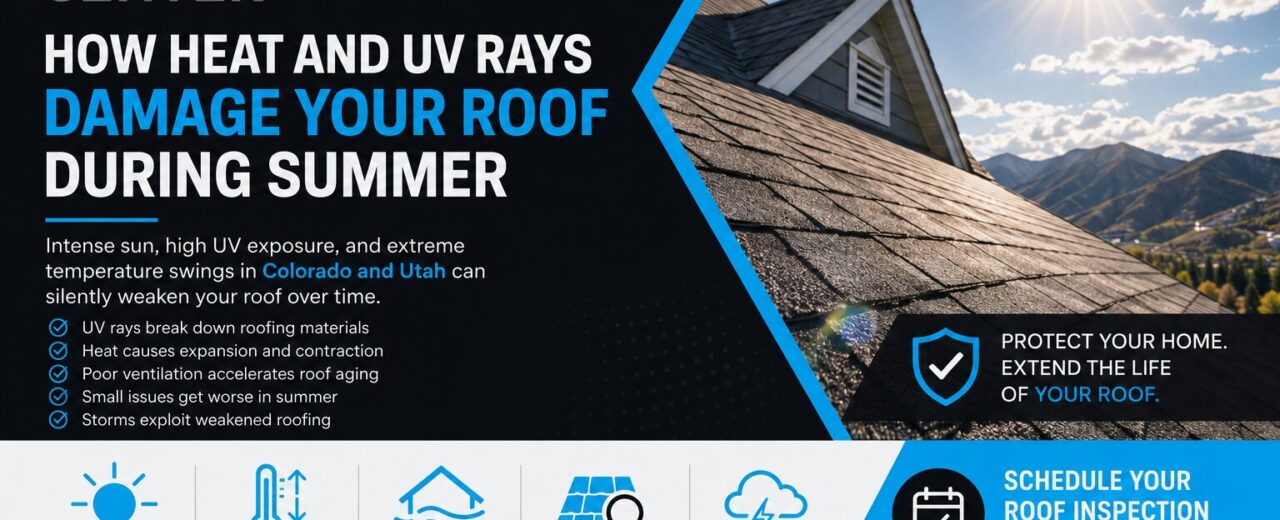
When homeowners think about roof damage, hailstorms, high winds, and winter snow often get most of the attention. While those are significant threats, summer heat and intense UV exposure can be just as damaging—often in ways that aren’t immediately visible.
Throughout Colorado and Utah, roofing systems face some of the harshest weather conditions in the country. High elevations, intense sunshine, dry climates, and dramatic temperature swings place constant stress on roofing materials. Over time, this exposure can shorten the life of your roof, increase repair costs, and even lead to premature roof replacement.
Understanding how summer heat and UV rays affect your roof can help you take proactive steps to protect your home and your investment.
1. UV Radiation Slowly Breaks Down Roofing Materials
One of the biggest summer threats to your roof is ultraviolet (UV) radiation.
Both Colorado and Utah experience high levels of UV exposure due to their elevation and abundant sunshine. Over time, these rays gradually degrade roofing materials, particularly asphalt shingles.
Common signs of UV-related roof damage include:
• Drying and deterioration of asphalt
• Cracking and brittleness
• Granule loss
• Reduced waterproofing protection
As shingles lose their protective granules, they become more susceptible to leaks, wind damage, and accelerated aging.
2. Heat Causes Expansion and Contraction
Summer temperatures can soar during the day and drop significantly at night throughout Colorado and Utah.
This repeated cycle of heating and cooling causes roofing materials to expand and contract, creating long-term stress on the roof system.
Over time, this can lead to:
• Curling or warping shingles
• Loosened fasteners and nails
• Separation around flashing and roof penetrations
• Reduced adhesion between roofing components
Although the effects may not be immediately noticeable, years of thermal movement can significantly shorten roof life.
3. Poor Ventilation Accelerates Roof Aging
Many homeowners don’t realize that heat damage can come from inside the home as well.
Without proper attic ventilation, temperatures inside the attic can become extreme during summer months, effectively “cooking” the roof from underneath.
Excessive attic heat can:
• Accelerate shingle deterioration
• Increase cooling costs
• Reduce energy efficiency
• Contribute to moisture-related issues
Proper attic ventilation is one of the most effective ways to protect your roof and improve overall home performance.
4. Existing Roof Problems Get Worse in Summer
Small roofing issues rarely stay small for long.
Minor concerns such as:
• Lifted shingles
• Cracked sealant
• Exposed nail heads
• Damaged flashing
can quickly worsen when subjected to prolonged heat and UV exposure.
Routine inspections and preventative maintenance help identify and correct these issues before they develop into leaks or more expensive repairs.
5. Summer Storms Compound the Damage
Across Colorado and Utah, summer often brings sudden thunderstorms, hail, and high winds.
This creates a damaging cycle:
• UV rays weaken roofing materials
• Heat stresses the roof system
• Storms exploit those weakened areas
• Hail and wind accelerate deterioration
A roof already stressed by heat and UV exposure is far more vulnerable when severe weather arrives.
Why Early Detection Matters
Roof damage rarely occurs overnight. Instead, it develops gradually over months and years.
Unfortunately, by the time many homeowners notice a leak or water stain inside their home, the underlying damage is often much more extensive.
Proactive inspections and maintenance can help:
• Prevent costly repairs
• Extend roof lifespan
• Reduce emergency service calls
• Delay roof replacement
• Protect your home’s value
In many cases, catching summer-related roof damage early can save homeowners thousands of dollars over time.
How a Professional Roof Inspection Helps
A professional roof inspection is the best way to identify early signs of heat and UV damage before they become major problems.
During an inspection, roofing professionals evaluate:
• Shingle condition and granule loss
• Flashing and seal integrity
• Ventilation performance
• Signs of UV degradation
• Areas vulnerable to future storm damage
Regular inspections provide homeowners with a clear understanding of their roof’s condition and allow issues to be addressed before they escalate.
Protecting Your Roof This Summer
While you can’t control the weather, you can take steps to reduce its impact on your roof:
• Schedule annual roof inspections
• Maintain proper attic ventilation
• Keep gutters clean and functioning properly
• Address minor repairs promptly
• Monitor your roof after severe storms
These preventative measures can significantly extend the life of your roofing system and reduce long-term ownership costs.
Final Thoughts
Summer heat and UV exposure are often overlooked causes of roof deterioration in both Colorado and Utah. Over time, they can weaken roofing materials, accelerate aging, and increase the risk of leaks and costly repairs.
The best defense is proactive maintenance, routine inspections, and early intervention.
At The Roofing Center, we help homeowners throughout Colorado and Utah protect their roofs with comprehensive inspections, preventative maintenance, repairs, and long-term roofing solutions designed for the unique climates of the Mountain West.
Schedule Your Roof Inspection Today
If you’re concerned about how summer heat and UV exposure may be affecting your roof, now is the perfect time to schedule a professional inspection.
Whether you need a roof repair, storm damage evaluation, preventative maintenance, or guidance on future roof replacement, The Roofing Center is here to help protect your home year-round.