How Roof Damage Can Increase Your Energy Bills
Most homeowners and commercial property owners think of roof damage as something that leads to leaks. While water intrusion is certainly a concern, many don’t realize that even minor roof damage can quietly drive up energy costs month after month.
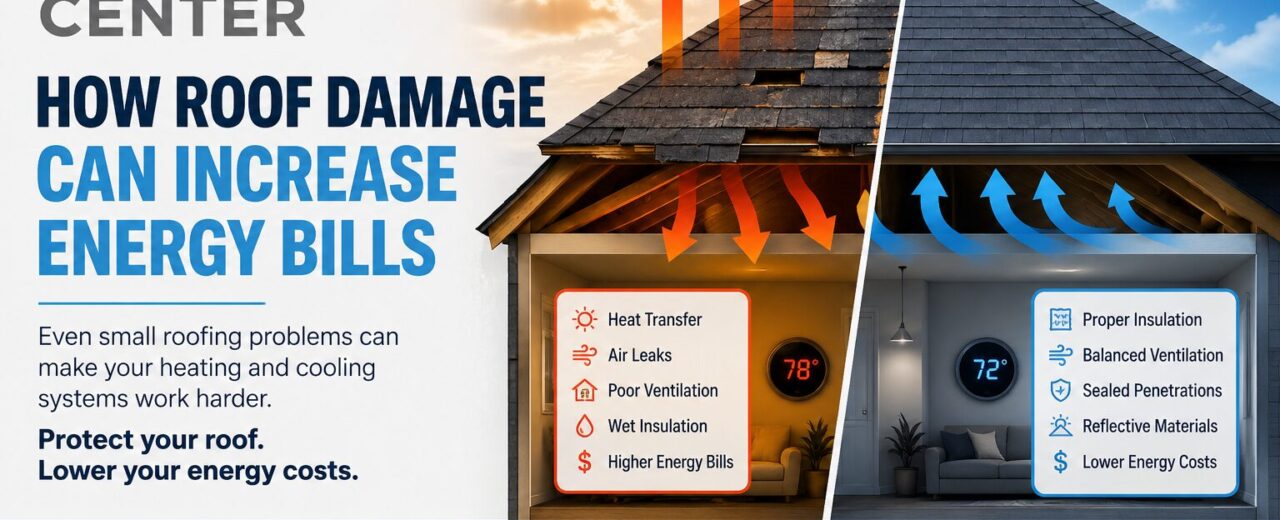
Your roof plays a critical role in insulating your building and maintaining indoor temperatures. When roofing materials become damaged or ventilation is compromised, your heating and cooling systems have to work harder to keep your home or business comfortable.
At The Roofing Center, we’ve helped countless property owners throughout Colorado and Utah identify roofing issues that were contributing to higher utility bills. Here’s how roof damage can impact your energy efficiency—and what you can do about it.
Your Roof Is Part of Your Building’s Energy System
A properly functioning roof does much more than keep rain out. It also works together with insulation, ventilation, and your HVAC system to regulate indoor temperatures.
When any part of the roofing system is compromised, energy efficiency suffers.
Your roof helps by:
- Reflecting solar heat
- Providing insulation against outdoor temperatures
- Allowing proper attic ventilation
- Preventing unwanted air leaks
- Protecting insulation from moisture
Damage to any of these components can increase monthly utility costs.
1. Damaged or Missing Shingles
Strong winds, hail, and aging can loosen or remove shingles, exposing the roof deck underneath.
Missing shingles allow:
- More heat to enter the attic during summer
- Conditioned air to escape
- Moisture to reach insulation
- Faster deterioration of surrounding roofing materials
Even a few missing shingles can reduce your roof’s ability to regulate indoor temperatures.
2. Roof Leaks Reduce Insulation Performance
One of the biggest hidden energy wasters is wet insulation.
When a roof leak allows moisture into the attic or roof assembly, insulation begins losing its effectiveness.
Wet insulation:
- Compresses over time
- Loses R-value
- Retains moisture
- Encourages mold growth
- Becomes less effective at controlling heat transfer
The result is an HVAC system that must run longer and work harder.
3. Poor Roof Ventilation
Roof ventilation is often overlooked, but it’s essential for energy efficiency.
Without proper airflow, hot air becomes trapped inside the attic during summer.
Attic temperatures can exceed 140–160°F, causing:
- Higher air conditioning costs
- Premature shingle aging
- Increased indoor temperatures
- Reduced comfort throughout the building
Balanced intake and exhaust ventilation help remove excess heat and improve energy efficiency.
4. Damaged Flashing Creates Air Leaks
Flashing seals vulnerable areas around:
- Chimneys
- Skylights
- Plumbing vents
- Roof penetrations
- Walls
When flashing becomes damaged or pulls away from the roof, outside air can enter while conditioned air escapes.
These air leaks force heating and cooling systems to compensate throughout the year.
5. UV Damage Weakens Roofing Materials
Constant exposure to sunlight gradually breaks down roofing materials.
As roofing products deteriorate, they become less effective at reflecting heat.
Older roofs often absorb significantly more solar energy than newer roofing systems, increasing cooling costs during the hottest months.
6. Flat Roof Damage Increases Heat Absorption
Commercial buildings with flat roofs are especially vulnerable to summer heat.
Common issues include:
- Ponding water
- Membrane deterioration
- Seam separation
- Surface cracking
- Blistering
These problems reduce the roof’s ability to reflect sunlight and insulate the building, causing HVAC systems to run longer during peak summer temperatures.
7. Clogged Gutters Can Lead to Hidden Damage
Clogged gutters don’t just cause overflowing water—they can also allow moisture to back up beneath roofing materials.
Over time, trapped moisture can:
- Damage roof decking
- Wet insulation
- Create hidden leaks
- Reduce energy efficiency
Routine gutter maintenance protects both your roof and your utility bills.
Signs Your Roof May Be Increasing Your Energy Bills
Watch for these warning signs:
- Sudden increases in heating or cooling costs
- Uneven temperatures between rooms
- HVAC system running longer than normal
- Hot upstairs rooms during summer
- Ice dams during winter
- Drafts near ceilings or attic access points
- Water stains on ceilings
If you notice any of these symptoms, your roof could be part of the problem.
Preventative Maintenance Saves Money
Regular roof inspections help identify issues before they become expensive repairs—or costly utility bills.
A professional roof inspection can uncover:
- Loose or missing shingles
- Damaged flashing
- Ventilation problems
- Small leaks
- Wet insulation
- Gutter issues
- Storm damage
Addressing these problems early not only extends the life of your roof but also improves your building’s overall energy performance.
Improve Comfort While Lowering Energy Costs
An energy-efficient roof doesn’t happen by accident. It requires regular maintenance, timely repairs, and professional inspections to ensure every component is working together.
At The Roofing Center, our Roof Longevity Program helps homeowners and commercial property owners throughout Colorado and Utah protect their investment with proactive inspections, preventative maintenance, and expert repairs. By catching roofing problems early, we help extend roof life, reduce unexpected repair costs, and improve your building’s energy efficiency.
If you’ve noticed rising utility bills or suspect your roof may be contributing to higher energy costs, now is the perfect time to schedule a professional roof inspection. A healthier roof can mean a more comfortable building—and savings that continue month after month.