How Often Should Commercial Roofs Be Professionally Inspected?
A commercial roof is one of the largest investments a building owner or property manager will make. Yet, many roofs are only inspected after a leak appears or a major storm causes visible damage. By then, what could have been a simple maintenance issue may have turned into an expensive repair or even a premature roof replacement.
The good news is that regular professional roof inspections can identify small problems before they disrupt your business or impact your tenants. At The Roofing Center, we recommend a proactive inspection schedule that helps commercial property owners throughout Colorado and Utah maximize the lifespan of their roofing systems while minimizing unexpected costs.
The Industry Standard: Twice Per Year
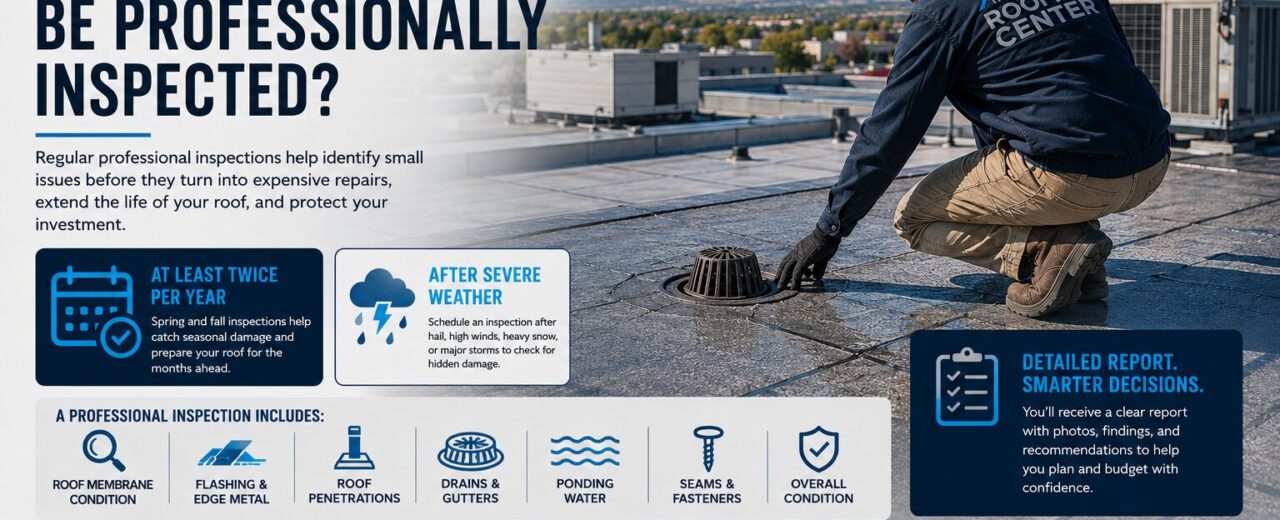
Most commercial roofing manufacturers and industry experts recommend having your roof professionally inspected at least twice a year:
- Spring – To identify damage caused by winter snow, ice, and freeze-thaw cycles.
- Fall – To prepare your roof for winter by addressing any issues before snow and freezing temperatures arrive.
These seasonal inspections allow roofing professionals to catch developing problems while repairs are still relatively inexpensive.
Always Schedule an Inspection After Severe Weather
In addition to routine inspections, your roof should be evaluated after significant weather events such as:
- Hailstorms
- High winds
- Heavy snowfall
- Ice storms
- Severe rainstorms
Not all storm damage is visible from the ground. Membrane punctures, lifted flashing, loose seams, or hail impacts may go unnoticed until they begin leaking weeks or months later. A prompt inspection also provides valuable documentation if an insurance claim becomes necessary.
What Happens During a Commercial Roof Inspection?
A professional commercial roof inspection is much more than a quick walk across the roof.
An experienced roofing contractor will evaluate:
- Roofing membrane condition
- Flashing and edge metal
- Roof penetrations
- HVAC equipment curbs
- Roof drains and gutters
- Ponding water
- Seams and joints
- Sealants
- Fasteners
- Signs of moisture intrusion
- General roof wear and aging
Most inspections also include photographs and a detailed report outlining current conditions, recommended repairs, and maintenance priorities.
Why Regular Inspections Save Money
Many commercial roofing problems develop slowly. Small punctures, loose flashing, or clogged drains rarely cause immediate leaks but can quickly worsen if ignored.
Routine inspections help:
- Prevent emergency repairs
- Extend roof lifespan
- Protect manufacturer warranties
- Reduce tenant complaints
- Improve budgeting for future maintenance
- Minimize business interruptions
Finding a $300 repair today can often prevent a $10,000 repair later.
Colorado and Utah Roofs Face Unique Challenges
Commercial roofs in Colorado and Utah experience some of the most demanding weather conditions in the country.
Throughout the year, roofing systems are exposed to:
- Intense UV radiation
- Large temperature swings
- High winds
- Heavy snow loads
- Freeze-thaw cycles
- Hailstorms
These conditions accelerate roof aging and increase the importance of routine inspections and preventative maintenance.
Protect Your Investment with a Roof Maintenance Program
The best way to stay ahead of roofing issues is with a scheduled maintenance program. Rather than waiting for problems to appear, preventative maintenance allows property owners to plan repairs, reduce long-term costs, and keep tenants safe and comfortable.
At The Roofing Center, we provide comprehensive commercial roof inspections, preventative maintenance, and repair services for office buildings, retail centers, industrial facilities, HOAs, apartment complexes, and other commercial properties throughout Colorado and Utah.
If it has been more than six months since your commercial roof was professionally inspected—or if your building recently experienced severe weather—now is the ideal time to schedule an inspection.
A proactive approach today can help protect your investment, extend the life of your roof, and prevent costly surprises tomorrow.