Why Chimney Flashing Is One of the Most Common Sources of Roof Leaks
Understanding how chimney flashing works and why maintaining it is essential to protecting your home.
When homeowners discover a roof leak near their fireplace or chimney, they often assume their shingles are failing. However, the problem frequently originates from something much smaller: chimney flashing.
Chimney flashing is one of the most vulnerable areas of a roofing system. Understanding why it fails and recognizing early warning signs can help homeowners prevent expensive water damage.
Here are five things every homeowner should know about chimney flashing.
1. What Is Chimney Flashing?
Chimney flashing is a system of metal components installed where your chimney meets your roof. Its primary purpose is to create a watertight transition between two different building materials.
A properly installed chimney flashing system typically includes:
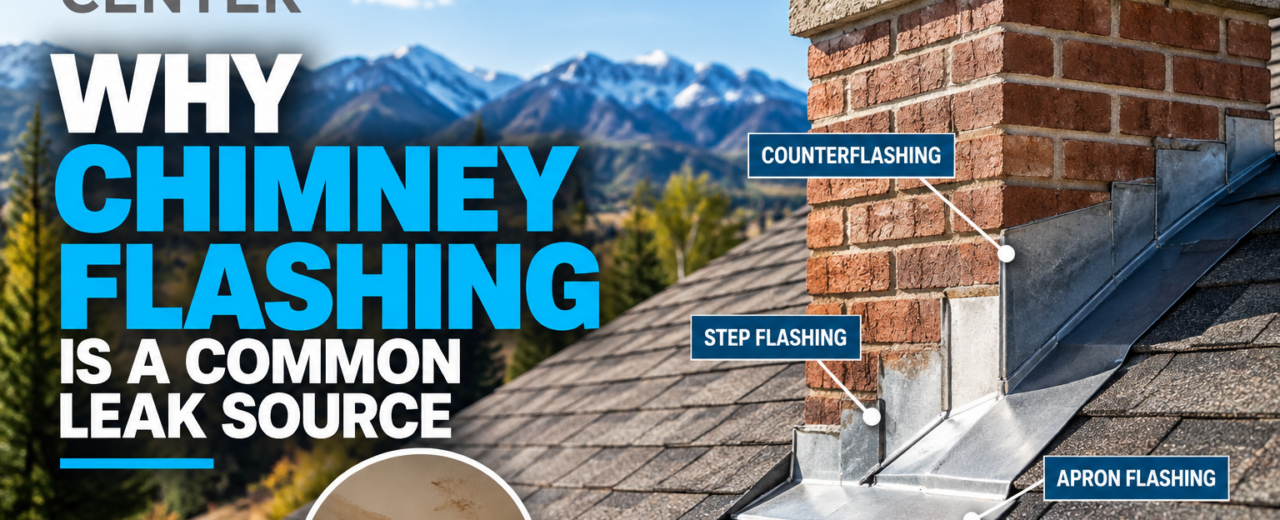
- Step flashing: Individual metal pieces integrated with shingles along the chimney’s sides.
- Apron flashing: Metal flashing installed along the downhill side of the chimney.
- Counterflashing: Metal installed into or over the chimney masonry to protect the underlying flashing.
- Back pan or cricket: Components that direct water around the uphill side of the chimney.
Each component plays an important role in preventing water intrusion.
2. Why Chimney Flashing Frequently Fails
Your roof and chimney are constantly exposed to changing weather conditions.
In Colorado and Utah, significant temperature fluctuations, heavy snowfall, strong winds, and repeated freeze-thaw cycles can accelerate deterioration.
Additionally, chimneys and roofing materials expand and contract differently as temperatures change.
Over time, these conditions can contribute to loose flashing, deteriorating sealants, and separation between roofing components.
Improper installation can make these problems considerably worse.
3. The Problem With Relying on Caulking
One common roofing mistake is attempting to repair leaking chimney flashing using roofing cement or excessive caulking.
Although sealants have legitimate applications, they should never replace a properly designed flashing system.
Temporary patches may stop water intrusion initially, but exposure to sunlight and changing temperatures can eventually cause these materials to deteriorate.
A properly installed flashing system directs water away from vulnerable areas rather than relying exclusively on sealants to prevent leaks.
4. Warning Signs of Failing Chimney Flashing
Identifying chimney flashing problems early can help prevent extensive interior damage.
Homeowners should watch for several warning signs:
- Water stains on ceilings or walls near the chimney.
- Dampness around the fireplace after heavy rainfall.
- Visible rust or corrosion on metal flashing.
- Loose or separated flashing components.
- Cracked mortar surrounding chimney flashing.
Keep in mind that water entering near your chimney doesn’t automatically indicate flashing failure. Damaged masonry, chimney crowns, and other roofing issues can produce similar symptoms.
A professional inspection can help identify the actual source.
5. How to Prevent Chimney Flashing Leaks
Preventive maintenance is essential to protecting vulnerable roofing components.
Schedule periodic roof inspections, particularly following severe storms or before winter arrives.
During an inspection, your roofing contractor should evaluate flashing connections, inspect sealants, examine surrounding shingles, and look for potential water-entry points.
Addressing minor flashing deficiencies early can help prevent damage to insulation, drywall, framing, and interior finishes.
Protect Your Home Before a Small Leak Becomes a Major Problem
Chimney flashing might represent a small portion of your roofing system, but its performance is critical to protecting your home.
At The Roofing Center, we help homeowners throughout Colorado and Utah identify roofing vulnerabilities and address potential problems before they become expensive repairs.
Whether you’re experiencing a leak around your chimney or simply want peace of mind before winter, our experienced team can help.
Don’t wait for water stains to appear. Contact The Roofing Center today to schedule a professional roof inspection and protect your investment.