Why Roof Ventilation Matters More Than Most Homeowners Realize
When homeowners think about roofing problems, they usually focus on shingles, leaks, hail damage, or gutters. However, one of the most important parts of a healthy roofing system is something many people rarely think about: roof ventilation.
Proper roof ventilation plays a major role in protecting your home, improving energy efficiency, and extending the lifespan of your roof. Without balanced airflow, heat and moisture can build up inside the attic, leading to expensive problems over time.
Where homes experience extreme seasonal temperature changes, heavy snow, hailstorms, and intense summer sun, roof ventilation becomes even more important.
Understanding how ventilation affects your roof can help homeowners prevent avoidable damage and reduce long-term repair costs.
What Is Roof Ventilation?
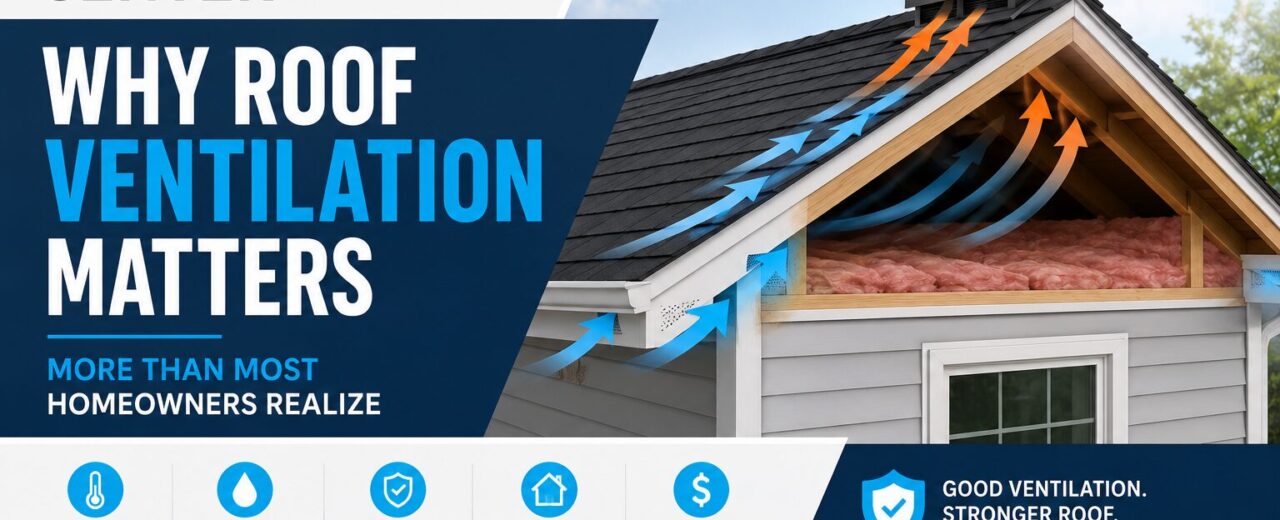
Roof ventilation is the system of intake and exhaust vents that allows air to circulate through the attic space.
A properly ventilated roof allows fresh outside air to enter while pushing excess heat and moisture out of the attic.
The Two Main Parts of Roof Ventilation
Intake Ventilation
Intake vents are usually installed near the roof’s lower edge, often along the soffits. These vents allow cooler air to enter the attic.
Exhaust Ventilation
Exhaust vents are located near the roof peak and allow warm, humid air to escape.
Together, these systems create continuous airflow that helps regulate attic temperature and moisture levels throughout the year.
Why Poor Roof Ventilation Causes Problems
Without proper airflow, heat and moisture become trapped inside the attic.
Over time, this can affect not only the roof itself but also the home’s energy efficiency, insulation, and structural components.
Common Problems Caused by Poor Ventilation
Excess Heat Buildup
During summer, attic temperatures can become extremely high without ventilation. Excess heat may damage roofing materials and force HVAC systems to work harder.
Moisture Accumulation
Warm indoor air naturally rises into attic spaces. Without proper ventilation, moisture becomes trapped and may lead to mold, mildew, or wood rot.
Premature Roof Aging
Excessive heat and moisture can shorten the lifespan of shingles and other roofing materials.
Ice Dam Formation
In winter, poor ventilation can contribute to uneven roof temperatures that increase the risk of ice dams.
Higher Energy Bills
Homes with poorly ventilated attics often experience reduced energy efficiency and increased cooling costs.
Colorado Weather Makes Ventilation Especially Important
Northern Colorado weather creates unique roofing challenges throughout the year.
Hot Summers and UV Exposure
Colorado’s high elevation means homes experience strong UV exposure and intense summer heat. Without proper attic ventilation, trapped heat can place extra stress on roofing materials.
Cold Winters and Snow Accumulation
During winter, warm attic temperatures can cause snow on the roof to melt unevenly. As water refreezes near roof edges, ice dams may develop and allow water intrusion beneath shingles.
Rapid Temperature Changes
Frequent freeze-thaw cycles in Colorado can accelerate wear on roofing systems, especially when ventilation issues already exist.
Because Colorado weather places year-round stress on roofs, ventilation problems can quickly contribute to larger roofing concerns.
Signs Your Roof May Have Ventilation Problems
Many homeowners do not realize their roof ventilation is inadequate until visible damage or higher utility bills appear.
Common Warning Signs Include:
Excessively Hot Attics
If your attic becomes extremely hot during summer, airflow may be insufficient.
Ice Dams in Winter
Repeated ice buildup along roof edges often points to ventilation or insulation issues.
Mold or Mildew Odors
Musty smells inside the attic may indicate trapped moisture.
Curling or Prematurely Aging Shingles
Excess heat can cause shingles to deteriorate faster than expected.
High Energy Costs
Poor attic airflow can force heating and cooling systems to work harder year-round.
If you notice any of these issues, scheduling a professional roof inspection can help identify whether ventilation problems are contributing to roof damage.
Roof Ventilation Can Extend Roof Lifespan
One of the biggest benefits of proper ventilation is its ability to help extend the life of your roof.
Balanced airflow helps roofing materials maintain more stable temperatures and reduces moisture buildup beneath the roofing system.
Benefits of Proper Roof Ventilation
- Extends shingle lifespan
- Reduces moisture-related damage
- Improves attic air quality
- Helps prevent mold growth
- Lowers cooling costs
- Reduces risk of ice dams
- Supports overall roofing performance
In some cases, improving ventilation may help homeowners avoid premature roof replacement.
Roof Inspections Help Identify Hidden Ventilation Problems
Ventilation issues are not always obvious from the outside.
A professional roof inspection allows roofing professionals to evaluate airflow, insulation conditions, moisture levels, and overall roof health.
A Roof Inspection May Include:
- Attic airflow evaluation
- Vent placement assessment
- Moisture and mold detection
- Insulation review
- Shingle condition analysis
- Hail damage roofing assessment
Working with a trusted roofing company in Northern Colorado ensures homeowners receive recommendations based on local climate conditions and roofing requirements.
Why Acting Early Matters
Ventilation problems tend to worsen gradually over time. By the time major symptoms appear, significant damage may already exist beneath the surface.
Early Action Helps Prevent:
- Structural wood rot
- Mold growth
- Insulation damage
- Premature roof repair costs
- Increased energy bills
- Early roof replacement
Addressing ventilation concerns proactively is often far less expensive than dealing with long-term moisture or roofing damage later.
Choosing the Right Roofing Contractor
If you are searching for a “roofing contractor near me,” it is important to choose a contractor who understands the connection between ventilation, insulation, and long-term roofing performance.
An experienced roofing company in Northern Colorado can evaluate whether your current ventilation system is properly balanced and recommend improvements when necessary.
Protect Your Roof With Proper Ventilation
Roof ventilation is one of the most overlooked parts of home maintenance, yet it plays a critical role in protecting your roof and improving your home’s overall performance.
At The Roofing Center, we provide professional roof inspection, roof repair, roof replacement, and hail damage roofing services for homeowners throughout Northern Colorado. Our team understands how Colorado weather affects roofing systems and helps homeowners identify hidden issues before they become costly problems.
If you are concerned about your roof’s condition or attic ventilation, contact The Roofing Center today to schedule a professional inspection.
FAQ
- Why is roof ventilation important?
Proper roof ventilation helps regulate attic temperature and moisture levels, protecting roofing materials and improving energy efficiency.
- Can poor roof ventilation cause roof damage?
Yes. Poor ventilation can lead to excess heat, trapped moisture, mold growth, ice dams, and premature roof deterioration.
- How do I know if my attic has ventilation problems?
Common signs include high energy bills, ice dams, mold odors, excessive attic heat, and curling shingles.
- Can roof ventilation help lower energy costs?
Yes. Proper airflow reduces attic heat buildup, helping HVAC systems operate more efficiently during summer.
- Should roof ventilation be checked during a roof inspection?
Absolutely. A professional roof inspection should evaluate ventilation performance along with roofing materials and storm damage.