Understanding Roofing Manufacturer Certifications: Why They Matter When Choosing a Roofing Contractor
Not all roofing contractors are created equal. Understanding manufacturer certifications can help you make a more informed decision when replacing your roof.
When selecting a roofing contractor, homeowners often compare pricing, materials, and warranties. However, one important factor frequently gets overlooked: roofing manufacturer certifications.
These certifications can provide valuable insight into a contractor’s training, experience, and relationship with roofing material manufacturers.
Here’s what every homeowner should understand before hiring a roofing contractor.
1. What Is a Roofing Manufacturer Certification?
A roofing manufacturer certification is a designation awarded to roofing contractors who meet specific requirements established by a roofing material manufacturer.
Depending on the manufacturer and certification level, requirements may include:
- Completing manufacturer-specific installation training.
- Demonstrating roofing installation experience.
- Maintaining appropriate licensing and insurance.
- Meeting certain business and professional standards.
- Completing ongoing educational requirements.
Certifications vary considerably between manufacturers, so it’s important to understand exactly what each designation represents.
2. Why Manufacturer Certifications Matter
Roofing materials are engineered to perform as complete systems. Proper installation plays a critical role in their long-term performance.
Manufacturer training helps contractors understand installation specifications, product compatibility, ventilation requirements, and other important roofing details.
Certified contractors may also have access to additional technical resources and manufacturer support.
However, certification alone doesn’t guarantee installation quality. Homeowners should also evaluate a contractor’s reputation, experience, insurance, and workmanship warranty.
3. Understanding Different Certification Levels
Many roofing manufacturers offer multiple contractor certification levels.
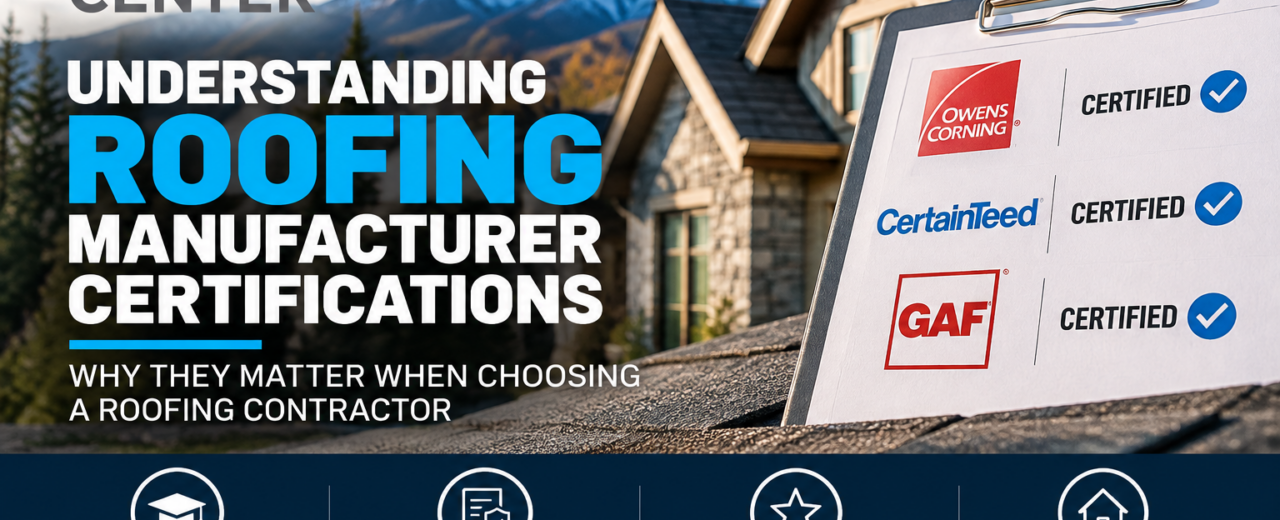
For example, manufacturers such as Owens Corning, CertainTeed, and GAF maintain contractor programs with different eligibility requirements and benefits.
Depending on the program, higher certification levels may involve additional training, installation experience, or business qualifications.
Some programs also provide eligible contractors with access to enhanced warranty offerings.
Important: Certification levels are not standardized across the roofing industry. A designation from one manufacturer cannot necessarily be compared directly with another manufacturer’s program.
Always verify a contractor’s current certification status directly with the manufacturer.
4. How Certifications Affect Roofing Warranties
One potential advantage of working with a manufacturer-certified contractor is access to enhanced warranty options.
Most roofing materials include standard manufacturer warranties covering qualifying manufacturing defects.
However, certain manufacturers offer additional warranty protection when eligible roofing systems are installed by appropriately certified contractors.
Depending on the specific program, enhanced warranties may provide additional coverage for qualifying installation-related issues.
Homeowners should carefully review warranty documentation, including coverage limitations, registration requirements, exclusions, and transferability.
Remember that a manufacturer’s material warranty and a roofing contractor’s workmanship warranty are two separate forms of protection.
5. Questions to Ask Before Hiring a Certified Contractor
Before signing a roofing contract, ask several important questions:
- Which roofing manufacturer certifications do you currently hold?
- What training is required to maintain those certifications?
- Does my roofing system qualify for an enhanced manufacturer warranty?
- Who is responsible for registering my warranty?
- What workmanship warranty does your company provide?
A reputable roofing contractor should clearly explain available warranty options and provide supporting documentation.
Choose Your Roofing Contractor With Confidence
Your roof represents a significant investment in your home’s protection and long-term value.
Understanding manufacturer certifications can help you evaluate roofing contractors, compare warranty options, and make informed decisions about your roofing project.
At The Roofing Center, we believe homeowners deserve clear information about roofing materials, installation practices, and warranty protection.
Our team works with homeowners throughout Colorado and Utah to identify roofing solutions that meet their specific needs.
Considering a roof replacement? Contact The Roofing Center today to schedule a professional roof inspection and learn more about your roofing material and warranty options.